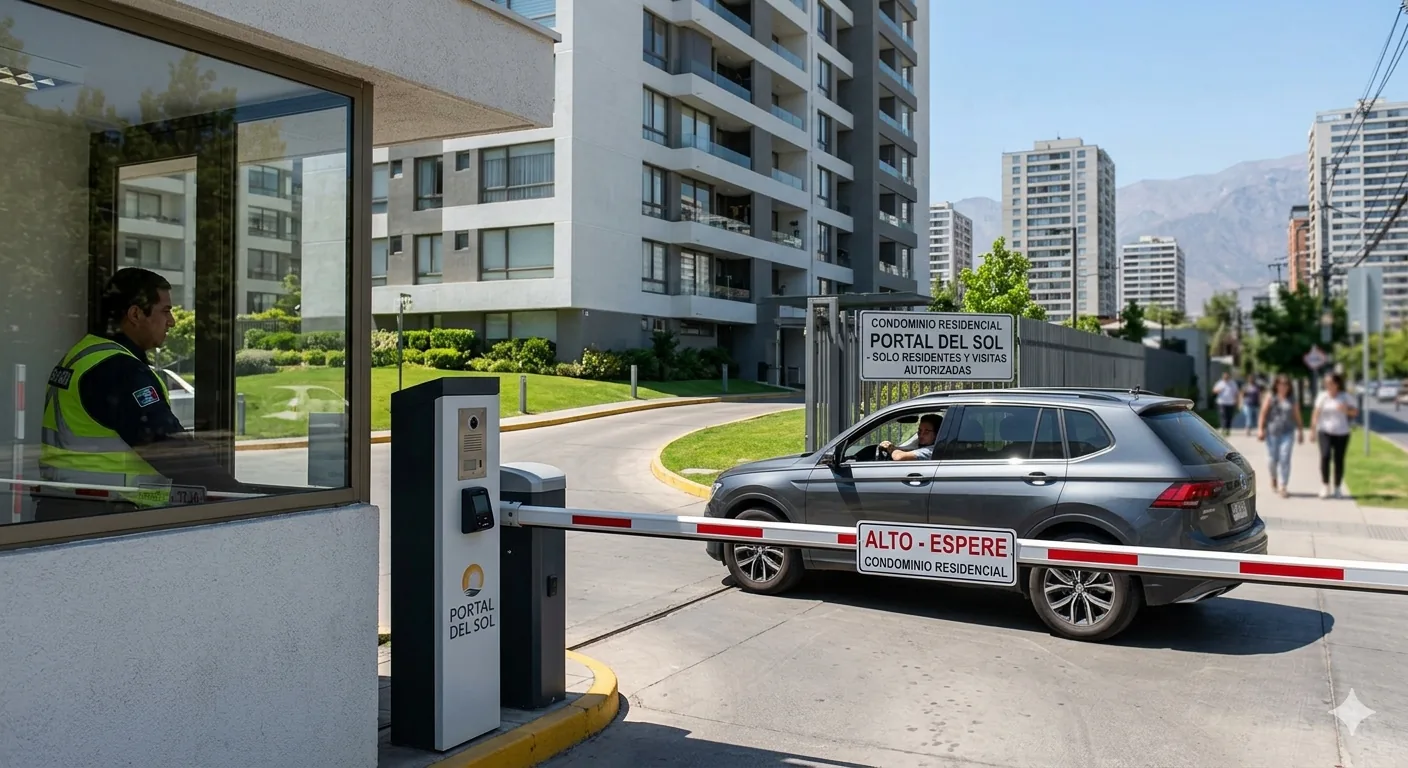
The three access methods in Porteria®
Porteria® supports three distinct ways of identifying and authorizing the entry of people and vehicles. Each has advantages depending on the context. Here we explain when to use each one.
1. QR Code
QR is the most versatile method. It works for both pedestrian and vehicle access, and allows two usage modes:
- Permanent QR: Assigned to a resident or employee. Saved in the app or printed. Valid while the user is active in the system.
- Temporary QR: Generated for a specific visit. Can have an expiration date (e.g., valid today only from 10:00 to 13:00). Ideal for deliveries, one-day visits and vendors.
💡 Best for: Residential buildings, companies with frequent visitors, buildings where residents don't want to carry physical cards.
QR advantages
- No additional hardware needed (just a camera or basic QR reader)
- Easy to share via WhatsApp
- Full control over validity period
- Works directly from the smartphone screen
Limitations
- Requires the visitor to show their phone or a printout
- Not suitable for high-speed vehicle access (the car must stop)
2. License plate recognition
The license plate reader camera automatically identifies the vehicle by its plate and opens the barrier without the driver stopping or taking out their phone. It is the most convenient method for residential or corporate parking.
🚗 How it works: The IP camera installed at the vehicle access point reads the license plate in motion and compares it against the authorized vehicle list. If it matches, the barrier opens in under 1 second.
License plate advantages
- Completely hands-free access
- Does not depend on the driver's smartphone
- Automatic log of every vehicle entry
- Works at night (infrared lighting included)
Limitations
- Requires an additional module (reader camera)
- Only applies to vehicles with a registered plate
- May fail with very dirty or damaged plates
3. RFID tag / card
The tag is a card or key fob with an RFID chip that is held near a reader to open access. It is the most traditional method, but also the most robust in industrial environments or for users without smartphones.
RFID tag advantages
- Does not depend on battery or internet on the user's side
- Very fast (under 0.5 seconds)
- Ideal for shift workers with repetitive access needs
- Works in areas without cell signal
Limitations
- Can be lost or lent out (lower identity control)
- Requires physical card management
- Replacement cost if lost
Which one should you choose?
Most Porteria® installations combine two or more methods: QR for pedestrians and license plate for vehicles, for example. The system manages all of them from the same panel.